- Builder and Developer Insights
- Posts
- Reserve Fund Stress Testing
Reserve Fund Stress Testing
Sponsored by


Good morning!
We’re seeing more decisions made faster than ever—but not always better. That’s exactly why we opened up our On-Demand AI Decision Sprint for FREE
Take it for a spin and see how much sharper your thinking gets when speed and clarity actually work together.
— Lucas Robinson, Founder & CEO at BudgetMailboxes.com
🎯 This Week’s Strategy:
Reserve Fund Stress Testing
🛠️ Boardroom Brief:
Lowe’s Commits $250M to Workforce Development Amid Escalating Labor Shortage
Strategy
🎯 Reserve Fund Stress Testing
In an environment defined by cost volatility, interest rate uncertainty, and shifting demand cycles, Reserve Fund Stress Testing is becoming an essential discipline for developers and builders. This strategy involves rigorously modeling how your project’s or portfolio’s reserve funds perform under adverse scenarios such as construction delays, cost overruns, slower sales absorption, or financing shocks.
Rather than treating reserves as a static safety buffer, stress testing transforms them into a dynamic risk management tool. It enables you to identify funding gaps before they materialize, maintain liquidity through disruptions, and make more resilient capital allocation decisions.
Developers who implement reserve fund stress testing gain clearer visibility into downside risk, stronger lender confidence, and improved long-term financial stability.
How to Implement Reserve Fund Stress Testing in Your Projects
✅ Define Key Risk Scenarios
Model realistic downside cases such as 10–20% cost overruns, 3–6 month schedule delays, slower unit sales, or rising interest rates. Include both isolated and combined stress scenarios.
✅ Build a Dynamic Financial Model
Use cash flow models that incorporate timing of inflows (sales, financing) and outflows (construction, debt service, operations). Ensure reserves are explicitly tracked over time, not just as a lump sum.
✅ Establish Minimum Liquidity Thresholds
Determine the minimum reserve level required to keep the project solvent under stress. This becomes your “red line” for decision-making and risk escalation.
✅ Run Sensitivity Analysis Regularly
Continuously test how sensitive your reserves are to key variables like cost inflation, absorption rates, and financing terms. Update assumptions as market conditions evolve.
✅ Align with Lenders and Investors
Share stress test outputs with capital partners. This builds credibility and can improve financing terms by demonstrating proactive risk management.
Why It Matters
Projects rarely fail due to a single issue, they fail when multiple pressures converge. Reserve fund stress testing prepares you for exactly that convergence. It shifts your approach from reactive problem-solving to proactive risk mitigation.
In a market where margins are tightening and uncertainty is the norm, developers who actively stress test their reserves are better positioned to protect capital, maintain project continuity, and capitalize on opportunities when others are forced to pause.
Adopting this strategy isn’t just about safeguarding downside, it’s about building financial resilience into every stage of development.
Your Kafka Bill Is an Architecture Problem

More than 80% of Kafka costs aren't hardware – they're interzone networking fees. WarpStream BYOC eliminates them entirely by replacing stateful brokers with stateless agents that write directly to your own object storage.
No disks, no inter-AZ replication, no partition fees. Goldsky cut TCO by 90%+. Your existing clients keep working – just point them at a new URL.
Learn how it works, then sign up for free. Get $400 in credits that never expire. No credit card required to start.
Boardroom Brief
Lowe’s Commits $250M to Workforce Development Amid Escalating Labor Shortage

Lowe’s $250 million commitment to train 250,000 tradespeople over the next decade underscores the severity and persistence of the construction labor shortage, with the industry currently needing an estimated 349,000 additional workers to meet demand. By expanding partnerships with community colleges, nonprofits, and workforce platforms like NCCER’s CareerStarter, the initiative aims to rebuild the talent pipeline across critical trades such as plumbing, electrical, and carpentry. For builders and developers, this signals both a long-term positive shift in labor availability and a near-term reality: workforce constraints will continue to impact project timelines, costs, and capacity. Strategic operators should view this as validation to invest in their own workforce development partnerships and training pipelines, as competition for skilled labor remains one of the most significant bottlenecks to growth.
Game
🎉 Fun Finale: Play & Poll
What is the biggest factor impacting your project pipeline right now?(Tap on your answer) |
 Real workflows. Real results | Curious About Agentic AI?A FREE community where agentic AI workflows are built and shared. |
2026’s biggest media shift
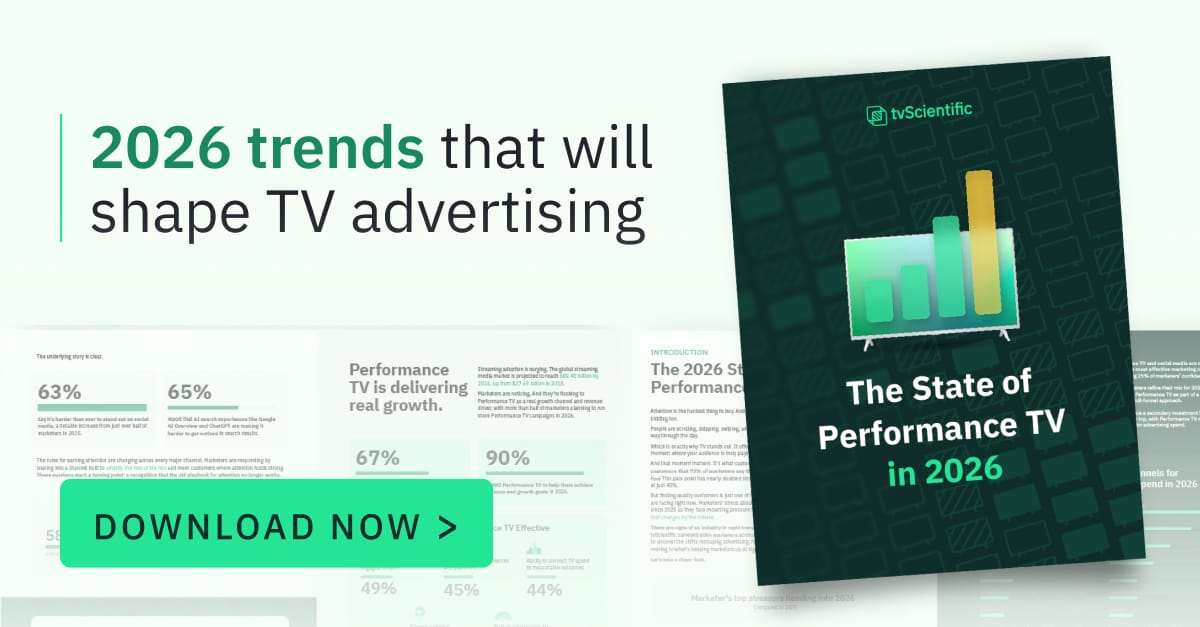
Attention is the hardest thing to buy. And everyone else is bidding too.
When people are scrolling, skipping, swiping, and split-screening their way through the day, finding uninterrupted moments where your audience is truly paying attention is the priority.
That’s where Performance TV stands out.
Check out the data from 600+ marketers on the most effective channels to capture audience attention in 2026.